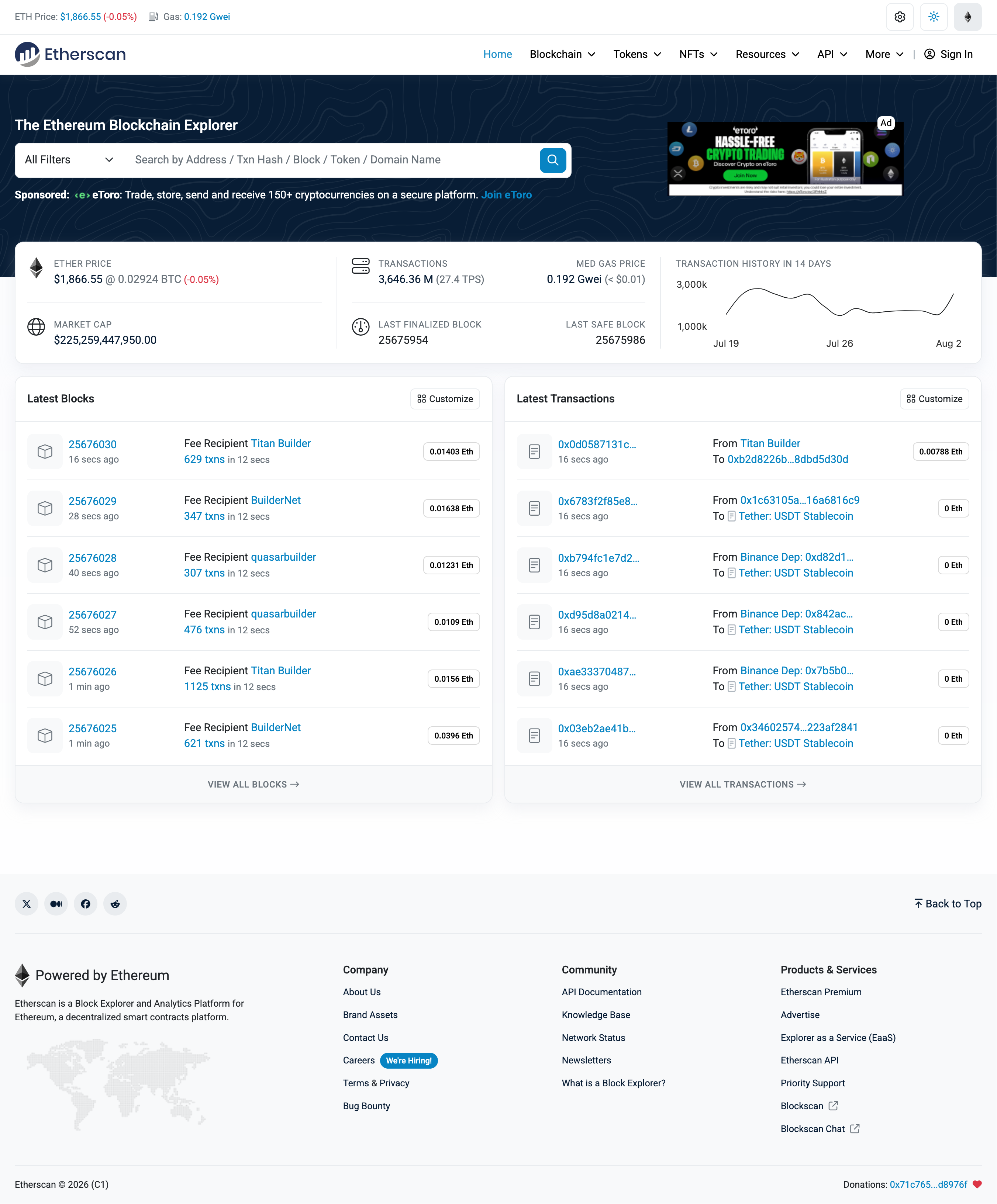
Blockchain technology has transformed the way digital transactions are recorded and verified. However, because blockchain data is stored in a decentralized ledger, users need specialized tools to access and interpret that information. Etherscan is one of the most widely used blockchain explorers for the Ethereum network, allowing users to search, verify, and analyze on-chain data in real time.
Whether you are an investor, developer, trader, or blockchain enthusiast, Etherscan provides valuable insights into Ethereum transactions, wallet addresses, smart contracts, tokens, and network activity.
What Is Etherscan ?
Etherscan is a blockchain explorer and analytics platform designed for the Ethereum blockchain. It enables users to search and verify transactions, monitor wallet balances, inspect smart contracts, track token transfers, and view detailed blockchain data through an easy-to-use interface.
Unlike a cryptocurrency wallet, Etherscan does not store digital assets. Instead, it acts as a public search engine that indexes blockchain data, making it accessible to anyone with an internet connection.
How Does Etherscan Work?
Every transaction on Ethereum is permanently recorded on the blockchain. Etherscan collects this publicly available information, organizes it into a searchable database, and presents it in a user-friendly format.
Users can search using:
Transaction hashes (TxIDs)
Wallet addresses
Smart contract addresses
Token contract addresses
Block numbers
ENS (Ethereum Name Service) names
The platform then displays detailed information about the selected blockchain data, including timestamps, transaction status, gas fees, token movements, and interacting addresses.
Key Features of Etherscan
1. Transaction Tracking
Etherscan allows users to verify Ethereum transactions instantly. By entering a transaction hash, users can check:
Transaction status
Sender and receiver addresses
Amount transferred
Gas price and gas used
Block confirmation details
Transaction timestamp
This feature is particularly useful for confirming deposits, withdrawals, and cryptocurrency transfers.
2. Wallet Address Lookup
Users can search any public Ethereum wallet address to view:
ETH balance
ERC-20 token holdings
NFT collections
Complete transaction history
Internal transactions
Asset transfers
This transparency makes blockchain activity easy to verify.
3. Smart Contract Verification
Developers can publish and verify smart contract source code on Etherscan. Verified contracts improve transparency by allowing users to inspect contract logic before interacting with decentralized applications (dApps).
4. Token Explorer
Etherscan supports Ethereum-based tokens, including:
ERC-20 tokens
ERC-721 NFTs
ERC-1155 multi-token standards
Users can explore token information, circulating supply, holders, transfers, and contract details.
5. Gas Tracker
Ethereum transaction fees fluctuate depending on network demand. Etherscan's Gas Tracker helps users monitor current gas prices and estimate transaction costs, allowing them to choose an appropriate fee before submitting a transaction.
6. Block Explorer
Each Ethereum block contains multiple transactions. Etherscan enables users to inspect individual blocks, including:
Block number
Miner or validator
Timestamp
Number of transactions
Gas usage
Block rewards (where applicable)
7. Token Approval Checker
Users can review token spending permissions previously granted to decentralized applications. Revoking unnecessary approvals can reduce the risk of unauthorized token transfers if a connected application is later compromised.
8. Analytics and Charts
Etherscan offers network analytics covering:
Daily transaction volume
Average gas prices
Active wallet addresses
Smart contract deployments
Token creation statistics
Ethereum network growth
These metrics help users understand overall blockchain activity.
Benefits of Using Etherscan
Etherscan offers several advantages for different types of users:
Free access to public Ethereum blockchain data.
Real-time transaction monitoring.
Improved transparency and trust.
Detailed wallet and token analysis.
Smart contract verification.
Developer-friendly APIs.
Historical blockchain records.
Educational resources for new users.
Use Cases
Etherscan is widely used across the Ethereum ecosystem.
Cryptocurrency Investors
Investors use Etherscan to verify transactions, monitor wallets, and research token projects before making investment decisions.
Developers
Developers verify smart contracts, debug blockchain applications, and integrate blockchain data into their applications using Etherscan APIs.
NFT Collectors
Collectors verify NFT ownership, review transfer history, and inspect token metadata.
Security Researchers
Blockchain investigators analyze suspicious transactions, trace stolen funds, and monitor malicious wallet activity.
Businesses
Companies integrate Etherscan's APIs into exchanges, wallets, payment platforms, and blockchain services.
Advantages
Some of Etherscan's biggest strengths include:
User-friendly interface
Reliable blockchain data
Real-time transaction updates
Extensive Ethereum ecosystem support
Developer APIs
Smart contract verification
Free access to essential features
Comprehensive blockchain analytics
Limitations
Although Etherscan is an essential blockchain tool, it has some limitations:
It only indexes supported blockchain networks and does not function as a wallet.
Wallet ownership generally remains pseudonymous unless voluntarily disclosed or identified through external information.
Some advanced features require a paid API subscription.
Users cannot reverse or modify blockchain transactions through Etherscan.
Etherscan and Blockchain Transparency
One of Etherscan's greatest contributions is improving transparency within the Ethereum ecosystem. Every transaction is publicly recorded, allowing users to independently verify transfers, token activity, and smart contract interactions. This openness helps reduce fraud, supports auditing, and strengthens trust in decentralized applications.
Future Outlook
As Ethereum continues to evolve with Layer 2 scaling solutions, decentralized finance (DeFi), NFTs, and tokenized assets, blockchain explorers like Etherscan are expected to remain essential. Ongoing improvements in analytics, developer tools, and support for emerging Ethereum technologies are likely to enhance its usefulness even further.
Conclusion
Etherscan has become the leading blockchain explorer for Ethereum by making complex on-chain data accessible to everyone. From tracking transactions and monitoring wallets to verifying smart contracts and analyzing tokens, it serves as an indispensable resource for users across the Ethereum ecosystem.
Whether you are sending ETH, researching a new token, auditing a smart contract, or exploring blockchain activity, Etherscan provides the transparency and information needed to navigate Ethereum with confidence.

AI Website Maker